


Raw materials
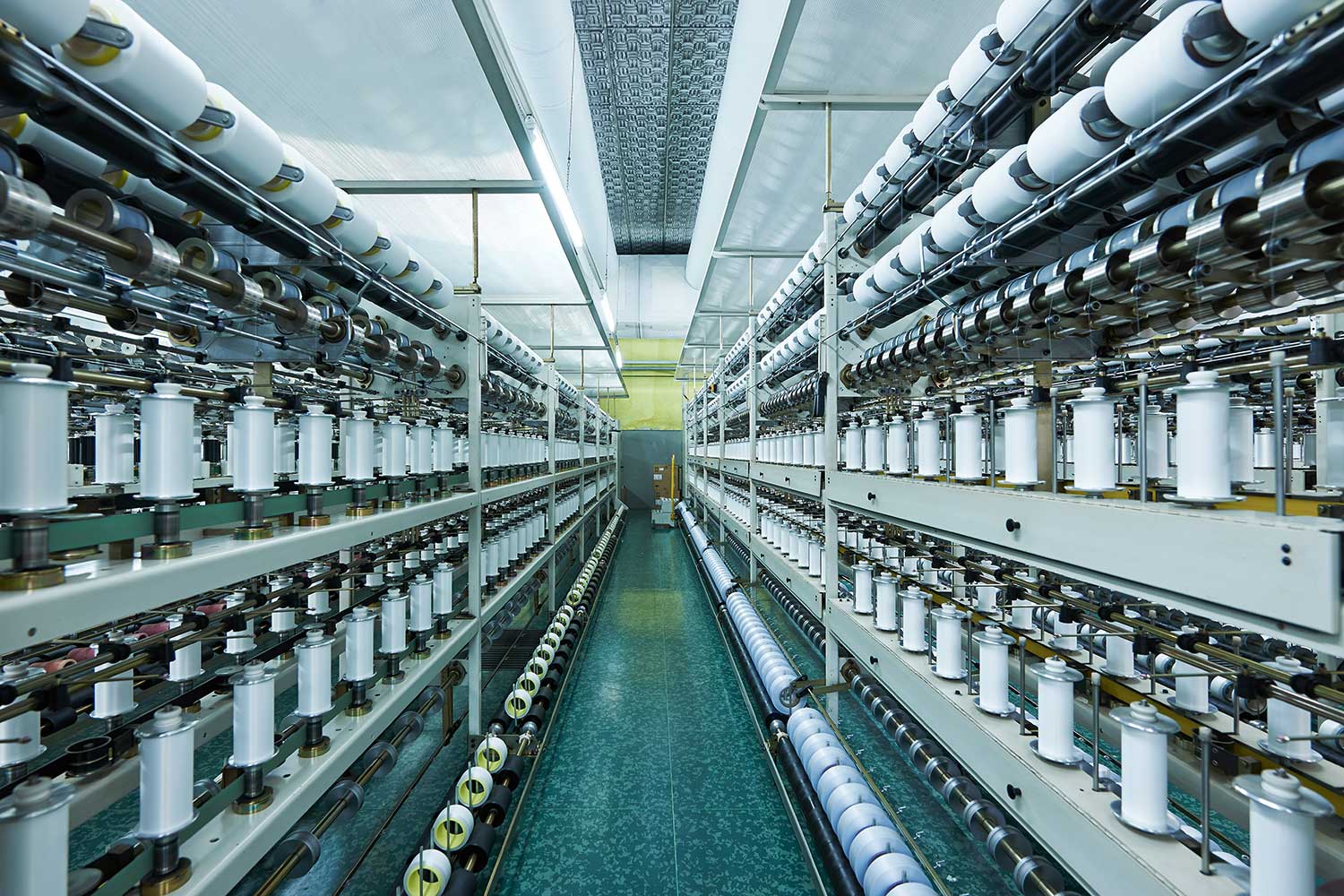
The range of raw materials we use in production is as varied as the requirements placed on our yarns.
Overview
We use the best raw materials for optimal yarns
Qualität ist über unsere gesamte Wertschöpfungskette das wichtigste Kriterium. Schliesslich geht es um perfekte Garne, die Sie bei der Herstellung Ihrer Produkte bestmöglich unterstützen sollen. Dass dafür nicht nur die besten Rohstoffe zum Einsatz kommen, sondern auch eine grosse Vielfalt, versteht sich von selbst. Nur so können wir Garne produzieren, die nicht nur unseren Ansprüche genügen, sondern die vor allem Ihre Erwartungen übertreffen.
PAN – Acrylic
PAN – Acrylic
“PAN”, the raw material abbreviation for “polyacrylonitrile”, is obtained by polymerising vinyl cyanide or acrylonitrile. It is processed into fibres, filaments and spun cables using a dry or wet spinning process. Like polyester and polyamide, polyacrylic is a synthetic fibre based on petroleum. Polyacrylic fibres are very baggy, and possess a wool-like character. The material retains heat very well, it barely creases, it can be dyed to good effect, it is elastic and soft. Polyacrylic is often mixed with wool to combine the great properties of both fibres.
AR – Aramide
AR – Aramide
It is a heat-resistant fibre that possesses a very high level of strength at a very low specific weight. Aramid yarns are very strong and tough. Due to their excellent mechanical and thermal properties – aramids can withstand temperatures of up to 370 degrees without melting or burning, they only ash out – aramid yarns are preferred in highly functional protective clothing for fire brigades, police, military or also in motor sports, in racing suits.
Functions
CO – Cotton
CO – Cotton
Cotton is a natural fibre grown around the equator, mainly in Africa, Uzbekistan, China, USA, Peru, Brazil and India. The raw fibre is extremely tear-resistant. Cotton can absorb up to 65% of its own weight in water. Cotton is still widely used in the clothing industry. Around 75% of all natural fibres used today are cotton. Cotton yarn is also popular and frequently used in home-based textiles. One reason is that cotton is very skin-friendly and is characterised by its low allergy potential.
Functions
6C – Elastane
6C – Elastane
Carbon has a very high stiffness and strength. Due to this, these fibres are mainly used for composites in the technical sector. Carbon fibres have a melting point of 3650 °C. Carbon fibres are also very good conductors of electricity.
Functions
EL – Elastane
EL – Elastane
Elastanes are segmented polyurethanes in which there are alternating soft segments with an amorphous structure, and hard segments with a crystalline structure. Their most important function in modern elastic textiles is to lend fabrics a defined functional and/or comfort-oriented degree of elasticity. These fibres can be stretched extensively and return to almost their original shape after being let go.
Functions
LA – Rubber
LA – Rubber
The raw material for the rubber threads is latex, which is obtained from the Hevea tree (rubber tree). Extrusion turns the latex into the raw material needed for further processing. Rubber gets its elasticity through a process of vulcanisation, i.e. the addition of sulphur. Rubber is, therefore, a natural, renewable raw material that is very elastic and flame retardant. Rubber is stretchable by nature and, therefore, highly elastic. Rubber is used in home and technical textiles, as well as in the orthopaedic sector in bandages and compression stockings. Given that many people are allergic to latex, the switch is increasingly being made to elastane as a functional elastic fibre.
Functions
PA – Polyamide
PA – Polyamide
Polyamide began its triumphal march as a raw material for yarns in the late 1940s in the USA – with the production of nylon stockings. Polyamides are fibres consisting of amide groups alternately incorporated in carbon chains. The material is elastic, it retains its shape and is tear-resistant. The fibres dry quickly and are very light. Today, polyamide yarns are mainly used in the production of fine tights and stockings, corsetry, swimwear and also for sportswear. In addition to its use in the textile sector, the fibre is also used in the technical sector.
Functions
PES – Polypropylene
PES – Polypropylene
Polyester is formed by way of poly-condensation from ethyl glycol, and consists of various monomers that lend the material different properties depending on its composition. Polyester is very tear-resistant. Another advantage of polyester is that it absorbs very little water and, therefore, is effective in wicking away water. Polyester is the world’s most important synthetic fibre in terms of volume.
Functions
PE – Polyethylene
PE – Polyethylene
Polyethylene has a low density and floats on water. But the most important thing is that it also absorbs little water. This means that moisture and sweat are not absorbed into the fabric, but are rather wicked away. In addition, polyethylene is highly resilient and has low wear and tear. It is resistant to acids, alkalis and chemicals, but at the same time permeable to gases such as oxygen and carbon dioxide as well as aromatic substances. Fabrics made of polyethylene are tensile, light and yet strong. The material is also frequently used in protective clothing.
Functions
PP – Polypropylene
PP – Polypropylene
Polypropylene absorbs practically no water. This ensures that liquids and sweat are passed on very effectively. In addition, it is resistant to almost all acids, alkalis and organic solvents. It is skin-friendly and odourless. With a specific weight of 0.91, it is lighter than water and is the lightest textile fibre ever. All this predestines PP for use in sports and outdoor clothing. The inner layer, which is close to the skin, is made of polypropylene to wick away moisture from the body more effectively. The other, overlying layers, for example, of wool or cotton, then ensure that the body is kept warm and no longer cools down so much. Polypropylene is also used for home-based textiles and carpets.
Functions
CV – Viscose
CV – Viscose
Viscose is a regenerative cellulose fibre and visually resembles cotton. Viscose is made from wood species such as beech, spruce or eucalyptus. Pure viscose is easily compostable. The yarn possesses a high degree of absorbency, which renders fabrics made of viscose very easy to dye or print. Viscose is often processed in a blend with cotton, which makes garments particularly velvety and soft, i.e. enhanced wearing comfort.
Functions
WO – Wool
WO – Wool
Wool is mostly obtained from sheep, as well as from goats, rabbits or camels. Wool contains a high sulphur content and can, therefore, absorb water vapour in large quantities without quickly becoming damp. Wool is also a good insulating fabric for retaining body heat. But wool is also characterised by relatively low sensitivity to dirt and odours. And the fact that wool does not ignite but only chars is also a key consideration for some applications. The clothing industry mainly uses virgin wool.
Functions
Let’s talk about your application.
We develop the right yarn solution for your product. Tell us about your requirement.